From Moradabad to Your Living Room: The 400-Year Legacy of Hand-Etched Nakashi Brass
The rhythmic metallic clinking in the gullies of Peetal Nagri has endured centuries. Discover how Moradabad master artisans hand-beat and carve sacred brassware that elevates modern entryways.

Shakeel Ahmed
Master Nakashi Metalsmith • September 12, 2026
The Sacred Nakashi Technique
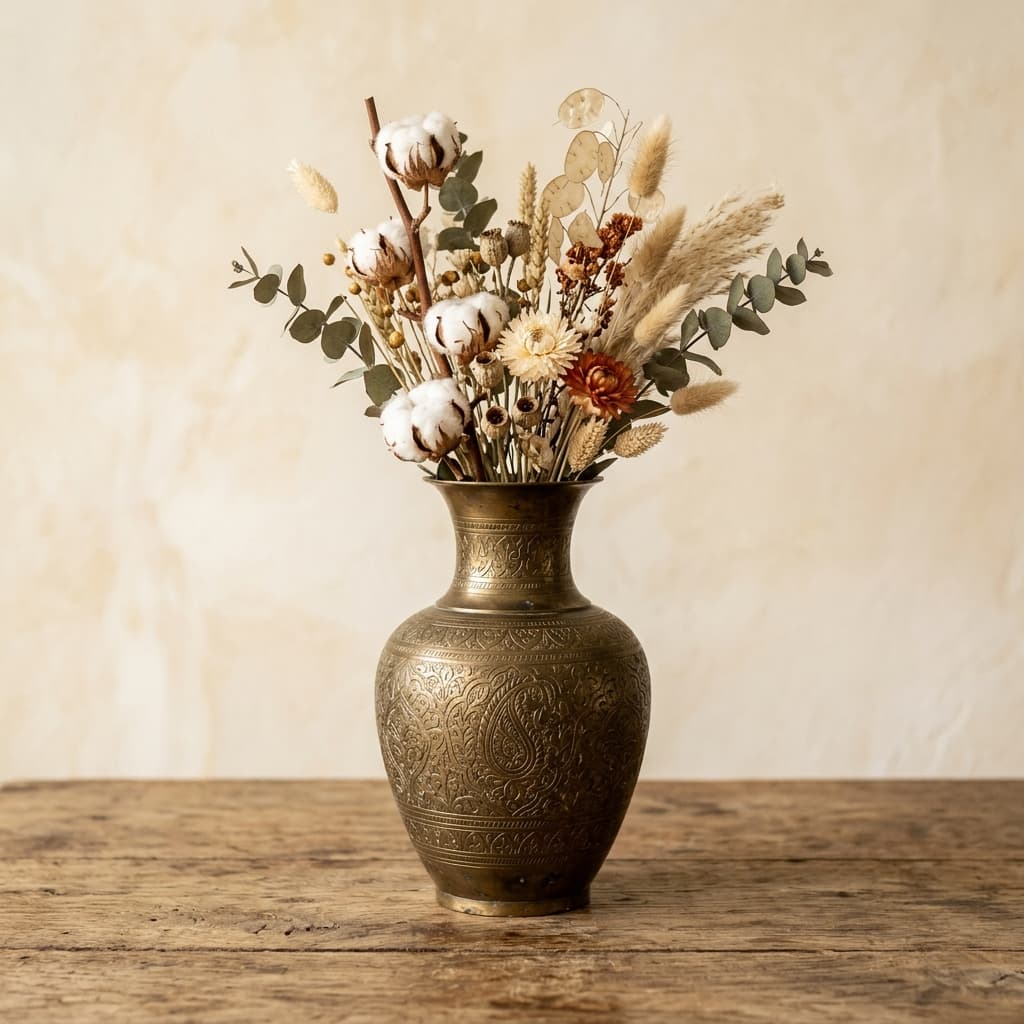
Nakashi refers to freehand engraving upon metal without preliminary pencil stencils. The artisan fills the interior of the hollow brass vessel with warm pine resin (Raal) which solidifies to provide internal resistance. Resting the object on a leather cushion, the master craftsman hammers steel punches of varying profiles to emboss swirling florals, dancing peacocks, and temple arches.
“A machine cuts sharp and cold. A human hand leaves gentle warmth, subtle asymmetry, and character upon the brass that grows richer with every passing year.”
— Field Journal Note, Dhaga India
Why Brass Endures in Modern Interiors
Unlike plated metals that flake and oxidize unevenly, pure solid brass develops a soft, regal patina. In Indian aesthetics and Vastu Shastra, placing a hand-hammered brass Urli filled with fresh water and floating flower petals at your front entrance balances energy and extends a warm, royal welcome to entering guests.
Caring for artisanal brass is remarkably simple—a gentle wipe with a dry cloth, or an occasional rub with tamarind paste to restore its gleaming golden sheen.
Brass Decorative Vase
Handcrafted directly by the artisans featured in this story
More Stories from the Loom
View All
The Lost Art of Moonj Grass Weaving: How 400 Women in the Terai Reclaimed Economic Freedom
6 min read
Natural Vegetable Dyes vs Chemical Pigments: The True Soul of Sanganer Block Prints
7 min read